A look at 21st century literary English studies.

How can we use “generator tools” of AI to enhance our ideas? (While still ensuring that we are learning language and practicing with critical thinking, or philosophical metacognition.)
After we have put in the effort to know and to think and experiment with language, ideas, history, modernity
Create an image of those ideas after the work is done.

Why metaphor?
What is the difference between a metaphor and gif?
What amount of conceptualization can be imparted through a symbol versus language alphabets?
How would a sentence of gifs be different than a paragraph of written alphabetic or character sentences?
To learn about METAPHOR in English class. We will look at ancient metaphors, modern metaphors, and discuss their functions and purposes. A study of T.S. Eliot’s “The Waste Land” is perfect to introduce the American Modernist English movement that transformed English writing in the twentieth-century. Discussions about gifs vs. written and spoken languages. Discussions about contexts and why people would choose during periods of civilization to write in metaphorical code as well as what metaphorical purposes images had in ancient times and what it may mean about their interlanguage and ways of speaking language. Was it a code or a way of thinking and communication? Explore avenues of mysteries in the literary field, why should you become a literary archeologist? Finally, create your own!
(This lesson is created using “A New Theory of Literary Gracefulness ” by Graciella Caroponis)
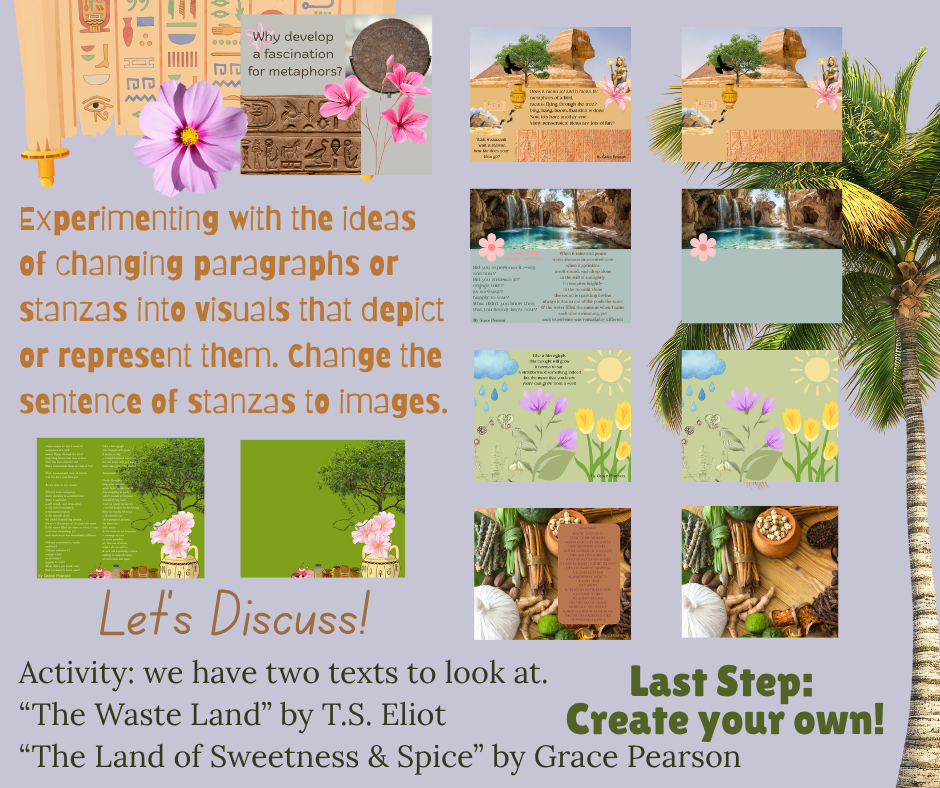

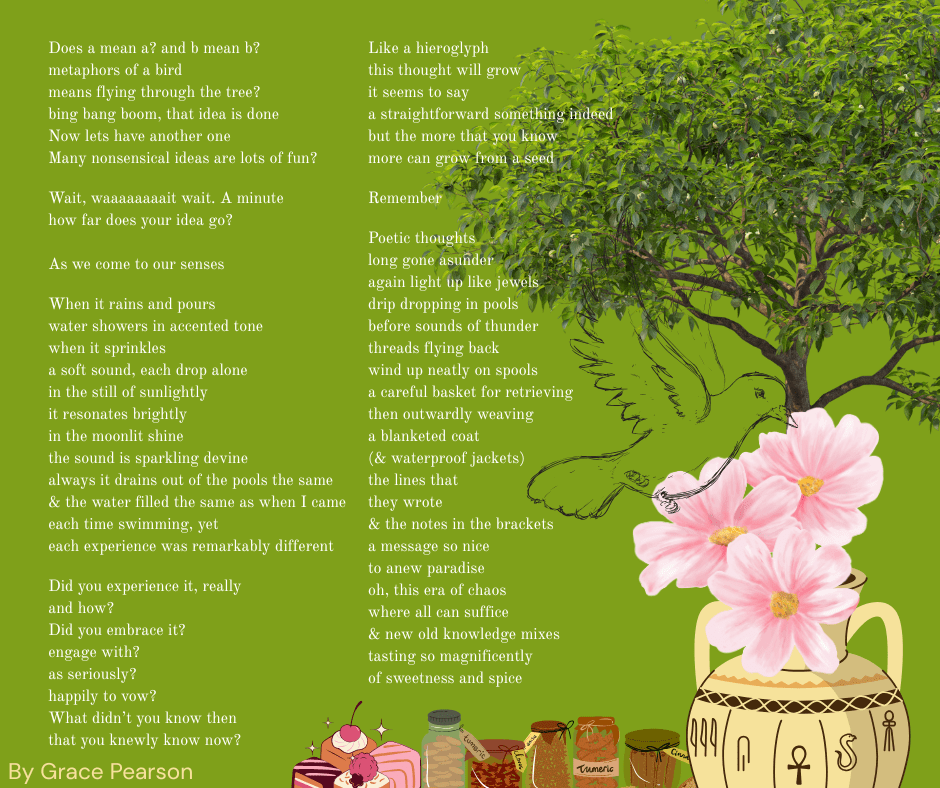



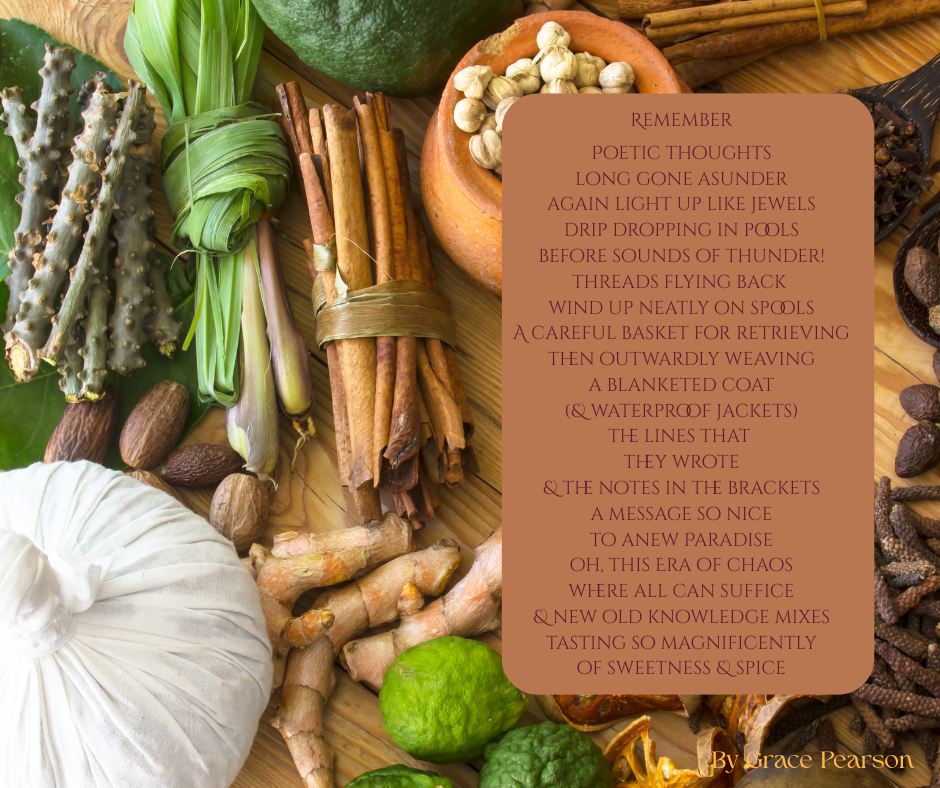
The acronym and initialism that I designed as an example, P.S.F or psf (it stands for Ponder, Search and Suppose, then Find) is to let students know what an assignment requires. Psf is to be utilized for research and creating conceptualizations in English. The intent is to use it to help determine when learners are intentionally engaged in an assignment and we are not utilizing AI to generate concepts before we generate our own ideas. We can use AI to help us search. We can also use AI after we have gathered all of our data. Hopefully the design is cute!
It’s also a fun moment to address the distinction between an acronym and initialism. “Psf” is meant to be said as a word or utterance. It means “oh man, do I have to?” or “of course!” depending on the context. This acronym can also be said using initialism P S F.
A super fun project is to discover acronyms and initialisms commonly used in the English language. A presentCHIA Community Learning activity is to make a display of favorite & important acronyms to present and to design one yourself if you are up for it! Discovering obscure and fascinating acronyms and initialisms could be a lot of fun too.


Next up is the accompanying curriculum that goes with the enhanced projects portion of the program. The curriculum has an estimated time of completion for the end of year 2025.
The curriculum for beginners starts with A.

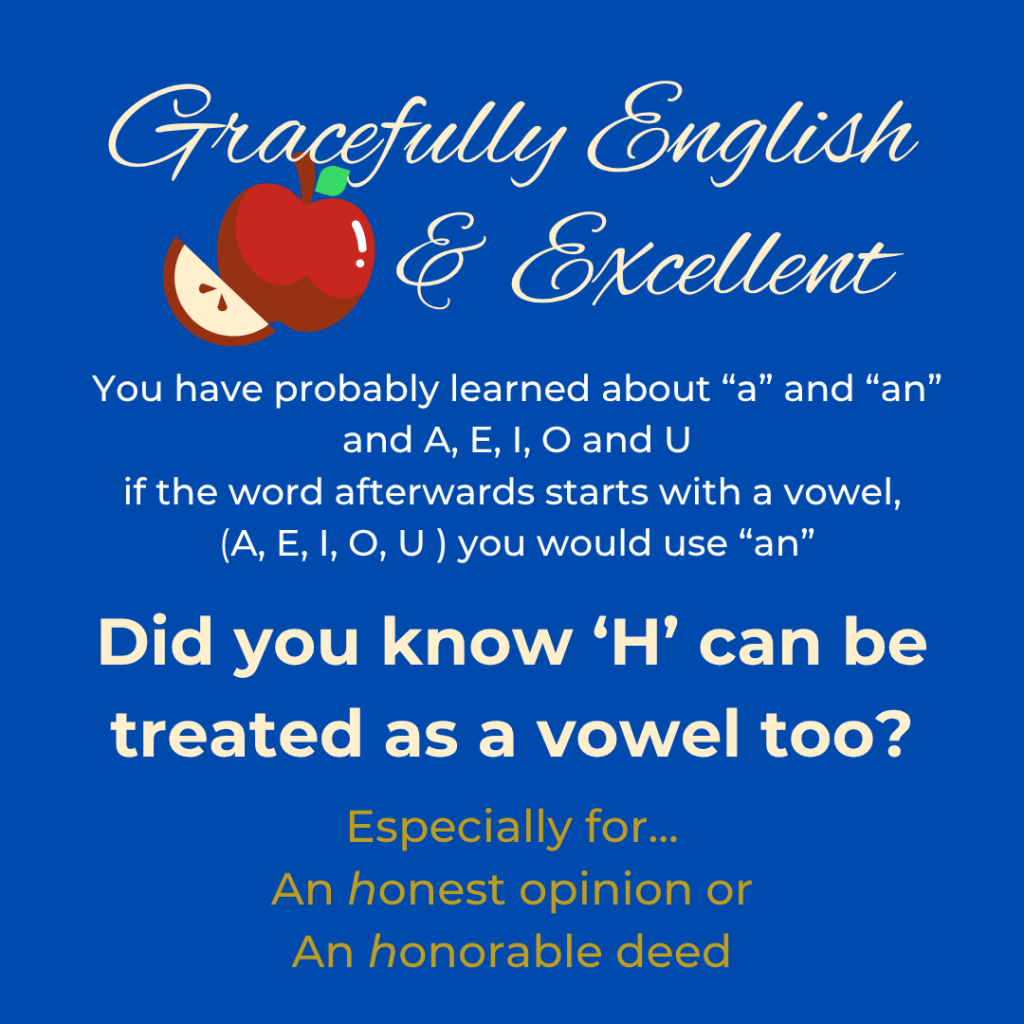
The following posts depict the Community Learning Component of the PresentCHIA curriculum program.
In the very first unit of learning and acquiring English language learners will practice vocabulary, grammar and pronunciation as they master the art of introducing themselves in English.
This unit 1 exercise in PresentCHIA can be as simple or as in depth as learners want it to be. Make sure to create a separate presentation with only the information that you want to share with the class if you are creating an in depth project. Students are starting a journey learning the English language and exploring cultures of English-speaking nations. It is expected that learners will a lot about themselves and English culture as they discover things anew or learn about new things on this adventure of English language acquisition. There may be things that they like or don’t like. There may be new perspectives or perceptions utilizing a new language. During the process of acquiring English language students formulate their own English identity. This program gives learners the opportunity to explore topics outside of class and to converse and learn about things that they really do like in order to provide a foundational and memorable language acquisition of English that they can use as they create more structural grammatic & informational comprehensions, vocabulary and terminology discoveries, and enhance phonological awareness. PresentCHIA is an approach that allows learners to personalize what they are acquiring in order to allow them to create a unique, desired and happy English identity when using the language.

Learners of English are practicing verbs in class or during their lessons. As a project to enhance acquisition and personalize the vocabulary learners are creating a presentation about things that they like doing or things that they do not look doing to share with the class.


Learners of the English language are practicing vocabulary and sentence structure (and pronunciation) for discourse pertaining to careers and job related terminologies.
Students and learners will present to the class about their own career or any careers utilizing English vocabulary and job titles. This activity emphasizes the unit in the classroom or online lessons about necessary work-related language in English. Feel free to discuss multiple jobs and multiple different types of careers. Whether you are interested in working at McDonalds, in customer service or as a CEO, we want to hear all about it!





 GracefullyEnglish.com